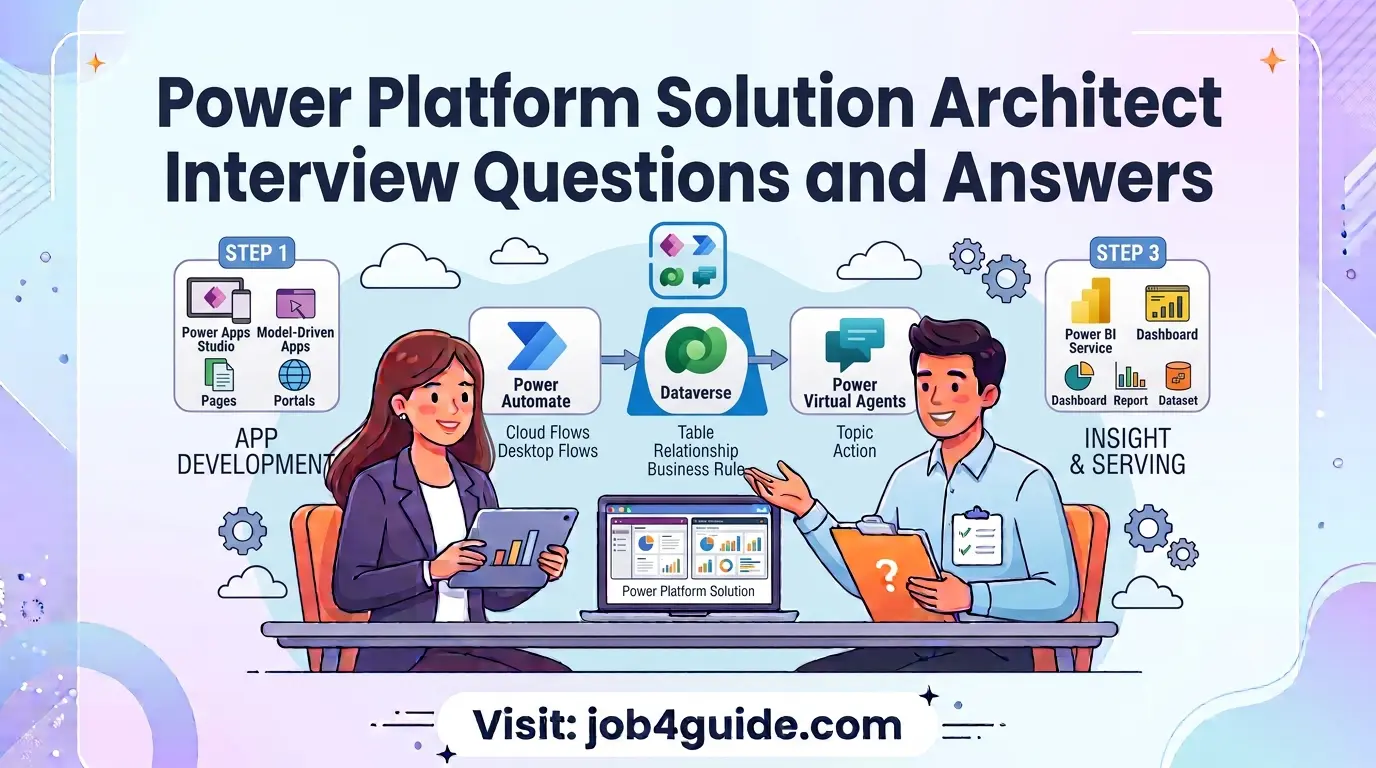
If you have an interview coming up for a Power Platform Solution Architect role, you already know it is not an easy interview. It is not just about knowing Power Apps or Power Automate. Companies want someone who can look at the whole picture, plan a solution properly, and talk to both developers and business leaders.
This guide covers the real questions that come up again and again in 2026 interviews, along with simple, honest answers. No heavy jargon, no copy-paste theory. Just what you actually need to walk in prepared and walk out confident.
Who Is a Power Platform Solution Architect?
A Solution Architect sits between the business team and the technical team. They do not usually write every line of code themselves. Instead, they design how Power Apps, Power Automate, Dataverse, Power BI, and Copilot Studio work together as one system. They also decide on security, data flow, and how the solution will be deployed and supported after go-live.
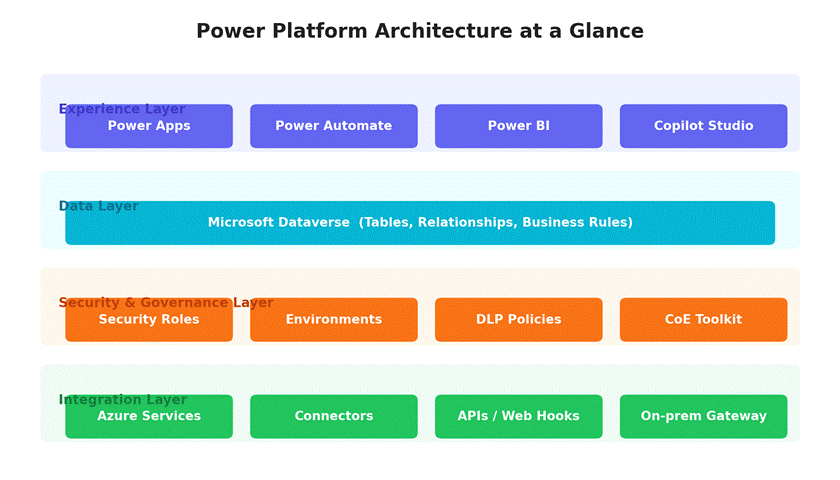
Figure 1: The four main layers of a Power Platform solution.
Skills Every Architect Needs Before the Interview
Before jumping into questions, it helps to know what interviewers are really testing. Here is a quick table that sums it up.
| Skill Area | Why It Matters |
| Dataverse & Data Modeling | Almost every solution is built on Dataverse tables, relationships and business rules. |
| Security & Governance | Architects must protect data with roles, teams, and environment strategy. |
| Solution Architecture (ALM) | Managed solutions, pipelines and environment strategy keep projects clean. |
| Integration Know-how | Real projects connect to Azure, SAP, or other line-of-business systems. |
| Communication | Architects explain technical trade-offs to business leaders in plain words. |
| Licensing Knowledge | Wrong licensing choices can break a project budget fast. |
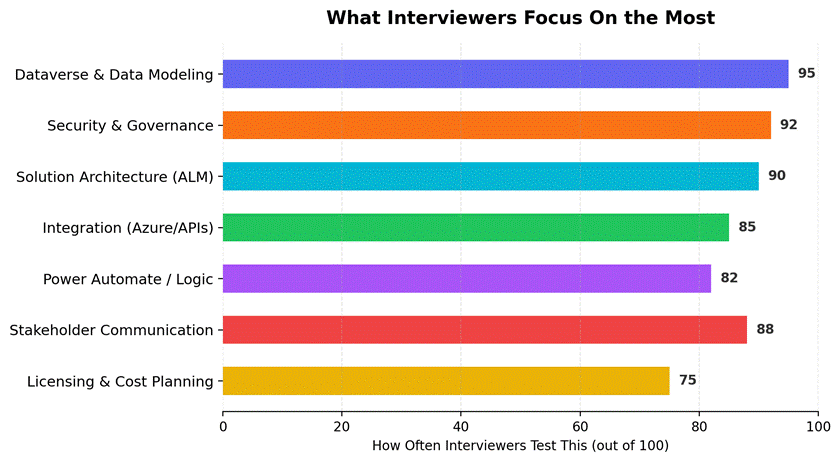
Figure 2: Topics interviewers ask about the most, based on common 2026 interview patterns.
Top Power Platform Solution Architect Interview Questions
Below are the questions grouped by topic. Read the question, then the short answer under it. Try to say the answer in your own words during practice, instead of memorizing it word for word.
1. Architecture & Solution Design Questions
Q1. What does a Power Platform Solution Architect actually do?
A Solution Architect looks at the big picture. They talk to business teams, understand the problem, and then decide how Power Apps, Power Automate, Dataverse, Power BI, and Copilot Studio should fit together. They also make sure the solution is secure, follows Microsoft’s best practices, and can grow later without breaking. In short, they turn a business need into a working, well-planned system.
Q2. How do you decide between Canvas Apps and Model-Driven Apps?
This is one of the most common questions, and interviewers want to see real thinking, not a textbook answer. Canvas Apps are a good fit when the user interface needs full control, like a custom mobile screen or a very specific layout. Model-Driven Apps are better when the data model is complex, when you need built-in views, forms, and business process flows, or when many tables are related to each other. In real projects, many solutions actually mix both types inside one app.
Q3. How do you approach designing a new Power Platform solution from scratch?
I always start with requirements, not tools. First, understand the business process and pain points. Then map out the data model in Dataverse. After that, decide which app type fits the users best, plan the security roles, and design the automation flows. Only at the end do I think about ALM, deployment, and monitoring. Jumping straight to building without this order usually leads to rework later.
Q4. How do you handle a situation where the client wants everything built in one giant Canvas App?
I would explain the trade-offs in simple terms, not technical jargon. A single giant app becomes slow, hard to maintain, and hard to test. I would suggest breaking it into smaller apps or components, using Dataverse for shared data, and reusing components where possible. Good architects push back politely when a request will cause problems later.
2. Security & Governance Questions
Q5. How does security work in Dataverse?
Dataverse security is built around business units, security roles, teams, and field-level security. A user gets access based on the security roles assigned to them or their team. Business units group users and records into a hierarchy, which helps control visibility. Field-level security locks specific fields, like salary data, so only certain roles can see them.
Q6. What is a Data Loss Prevention (DLP) policy, and why does it matter?
A DLP policy controls which connectors can be used together in the same app or flow. For example, a company may want to stop a flow from sending Dataverse data to a personal email connector like Gmail. DLP policies protect company data from leaving through unapproved channels, and every architect must plan them early, not after go-live.
Q7. How do you design an environment strategy for a large organization?
A typical setup has separate environments for development, testing, and production, plus a default environment that should not be used for real projects. Larger companies may add a sandbox for experiments. Each environment has its own security and data, and solutions move between them using managed solutions rather than manual changes.
3. Data Modeling & Dataverse Questions
Q8. What is the difference between a managed and unmanaged solution?
An unmanaged solution is used while building and testing, since it can be changed freely. A managed solution is locked and is used to deploy the finished work into test or production environments. Best practice is to always develop in an unmanaged solution and export it as managed before moving it forward.
Q9. How do you decide when to use Dataverse versus SharePoint or SQL for data storage?
Dataverse is the right choice when you need relationships between tables, security roles, business rules, and audit history. SharePoint works fine for simple document storage or basic lists with light business logic. SQL is useful when the data already exists in a large enterprise system or needs heavy reporting outside Power Platform. I always match the storage choice to how the data will be used, not just what feels easiest to set up.
Q10. What are calculated fields and rollup fields, and when should you avoid them?
A calculated field updates instantly using a simple formula, while a rollup field aggregates data from related records but updates on a schedule, not instantly. I avoid heavy use of rollup fields when real-time totals are needed, since there can be a delay of a few minutes before the value refreshes.
4. Integration Questions
Q11. How do you connect Power Platform with an external system like SAP or an on-premises database?
For on-premises systems, I use the On-Premises Data Gateway, which creates a secure tunnel without opening the firewall to the internet. For systems like SAP, I check if a certified connector already exists before building a custom connector. If no connector fits, Azure Logic Apps or Azure Functions can act as a bridge between Power Platform and the external system.
Q12. When should you use Power Automate versus Azure Logic Apps for integration?
Power Automate is best for business-user-friendly automation inside Microsoft 365 and Dataverse. Azure Logic Apps is better for heavy, enterprise-grade integration that needs advanced error handling, higher throughput, or connects many complex systems together. Some architects use both together, with Power Automate handling the business logic and Logic Apps handling the technical plumbing.
5. ALM, DevOps & Deployment Questions
Q13. What is Application Lifecycle Management (ALM) in Power Platform, and why is it important?
ALM is the process of moving a solution safely from development to testing to production, using version control and automated pipelines instead of manual copy-paste. It matters because manual deployment is slow and error-prone. A good ALM setup uses source control like Azure DevOps or GitHub, along with build and release pipelines.
Q14. How do you handle environment variables and connection references in a deployment pipeline?
Environment variables store values that change between environments, like a URL or an email address, so the same solution can work in dev, test, and production without manual edits. Connection references store the connector login details separately from the flow itself, so each environment can use its own connection safely.
Q15. What tools do you use to monitor a Power Platform solution after it goes live?
I rely on the Power Platform admin center for environment-level health, Application Insights for detailed app telemetry, and the flow run history inside Power Automate for automation issues. For larger organizations, the Center of Excellence (CoE) Starter Kit gives a wider view across all apps, flows, and makers.
6. Behavioral & Real-World Scenario Questions
Q16. Tell me about a time a project design had to change midway. How did you handle it?
Interviewers ask this to see how you react under pressure, not to test technical knowledge. A strong answer explains the situation briefly, the reason for the change, and the steps taken to adjust the design without breaking existing work. Always end with the result and what you learned.
Q17. How do you explain a technical decision to a non-technical business stakeholder?
I avoid technical words completely and use everyday comparisons instead. For example, instead of saying ‘we need a service bus for async messaging,’ I might say ‘we need a waiting line so requests don’t get lost when many people use the system at once.’ Business leaders care about outcomes, cost, and risk, not implementation details.
Q18. How do you keep your Power Platform knowledge up to date?
The platform changes fast, with new features almost every month. I follow the official release notes twice a year, join community events, and test new features in a sandbox environment before recommending them to clients. Staying current is part of the job, not an extra task.
How to Prepare for a Power Platform Solution Architect Interview
Knowing the answers is only half the job. Here is how to prepare the right way.
- Build a small end-to-end project yourself, even a simple one like a leave request app with approval flow. Hands-on experience shows in your answers.
- Read the official Power Platform release notes for the last two updates. Interviewers like to hear about recent features.
- Practice explaining one technical topic to a non-technical friend. If they understand it, you are ready for the business stakeholder questions.
- Review real project failures, not just successes. Interviewers value honesty about what went wrong and what you learned.
- Get comfortable with the Power Platform admin center and the CoE Starter Kit, since governance questions come up in almost every interview.
Frequently Asked Questions
Is coding required for a Power Platform Solution Architect role?
Not heavy coding, but a good architect should understand Power Fx, basic JavaScript, and how APIs work. You do not need to be a full-time developer, but you should be able to read code and guide developers.
What certification should I get before applying for this role?
The Microsoft PL-600 (Power Platform Solution Architect) certification is the most relevant one. Many candidates also hold PL-400 or PL-200 as a base before moving to PL-600.
How many years of experience are usually expected for this role?
Most companies look for at least four to six years of experience with Power Platform or a related Microsoft technology, including some time in a lead or architect-level role.
What is the salary range for a Power Platform Solution Architect in 2026?
Salaries vary a lot by country and company size, but this role usually sits at a senior level, often paying more than a standard developer role because of the mix of technical and business skills required.
Do interviewers ask about Copilot Studio and AI features now?
Yes, more interviews in 2026 include at least one question about Copilot Studio or AI Builder, since companies are adding AI features into their existing Power Platform solutions.
Final Thoughts
A Power Platform Solution Architect interview tests more than tool knowledge. It checks how you think, how you plan, and how you talk to people who are not technical. Use this guide as a starting point, practice out loud, and back up your answers with real examples from your own work whenever you can. That is what actually sets strong candidates apart.