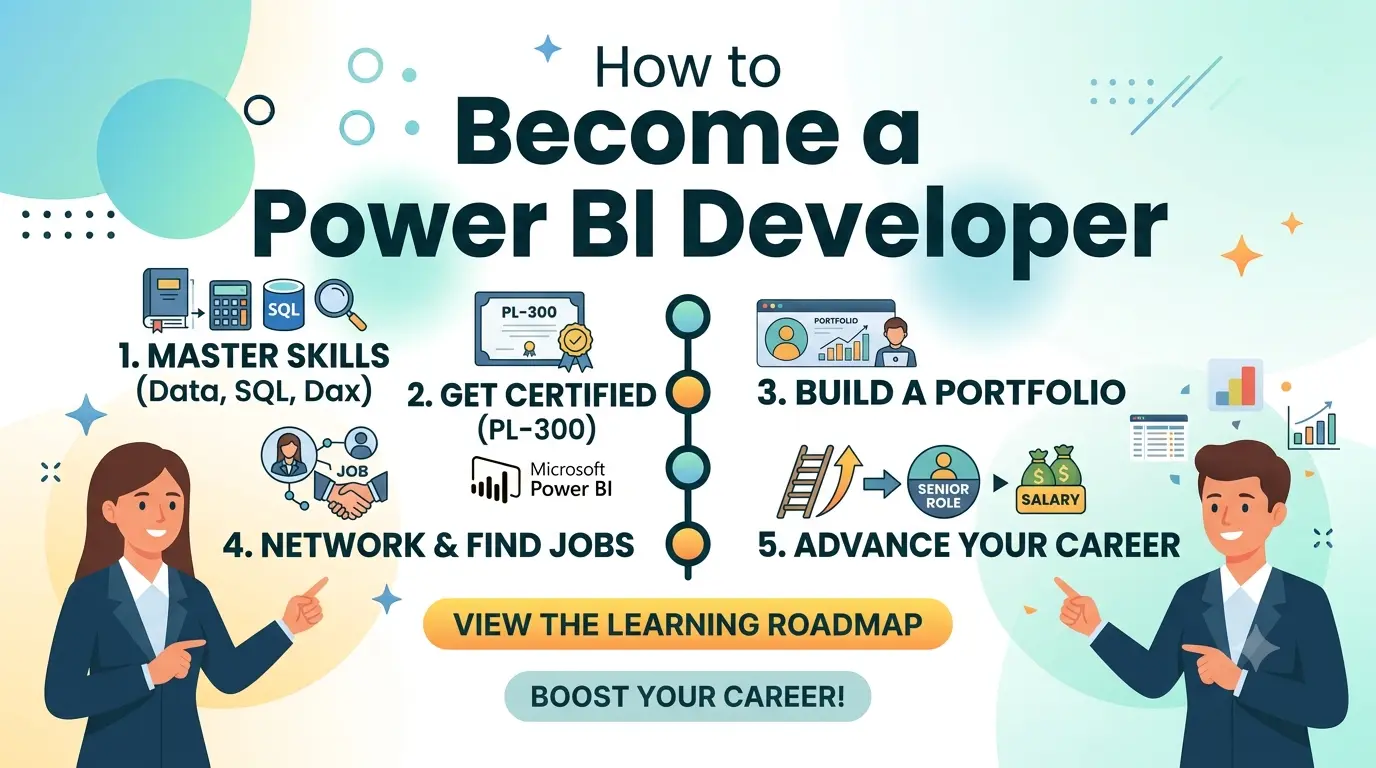
A step-by-step guide, with skills, certifications, salary and a real learning roadmap
Every company today collects data. Sales numbers, website clicks, customer feedback, delivery times — the list never ends. But data sitting in a spreadsheet does not help anyone. Someone has to turn it into a picture that a manager can look at and understand in ten seconds. That person is usually a Power BI developer.
If you enjoy working with numbers, like solving small puzzles, and want a career that pays well without needing a computer science degree, Power BI development is worth a serious look. In this guide, I will walk you through what a Power BI developer actually does, which skills you need, how to learn them in order, and how to land your first job in 2026. No fluff, just a plan you can follow.
What Does a Power BI Developer Do?
A Power BI developer builds reports and dashboards using Microsoft Power BI. But the job is much more than “making charts.” Most of the real work happens before a single chart is drawn. Here is what a normal day looks like:
- Connecting to data sources such as Excel files, SQL databases, SharePoint lists or cloud apps
- Cleaning and shaping messy data using Power Query
- Building a data model that connects different tables together correctly
- Writing DAX formulas to calculate totals, averages, growth rates and other business numbers
- Designing dashboards that are easy to read, not just colorful
- Publishing reports to the Power BI Service and setting up scheduled data refresh
- Controlling who can see what data, using row-level security
- Talking to managers or clients to understand what they actually need to see
That last point matters more than people expect. A big part of this job is asking good questions before you build anything. The best Power BI developers are not just tool experts — they understand the business behind the numbers.
Why Power BI Developer Is a Smart Career Choice in 2026
Power BI has been named a leader in business intelligence tools for several years in a row by industry analysts. You can read Microsoft’s own overview of the product here, and see why so many companies build their reporting around it.
A few reasons this career path still makes sense in 2026:
- Microsoft Fabric, the newer data platform from Microsoft, uses Power BI as its main reporting layer, so demand is not slowing down
- Nearly every industry needs this skill — finance, healthcare, retail, logistics, manufacturing, education
- Many roles are remote or hybrid, which gives you flexibility
- You do not need a computer science degree, just the right skills and a good portfolio
- Pay is solid at every level, and it climbs fast once you gain 2 to 3 years of real project experience
Skills You Need to Become a Power BI Developer
You do not need to learn everything at once. Here is what actually matters, ranked in the order most hiring managers care about:
| Skill | Why It Matters | Where to Start |
| Power Query (M language) | Used to clean and reshape raw data before it enters your model | Power BI Desktop, built-in Query Editor |
| Data Modeling | Connects tables correctly so your numbers are accurate | Learn the star schema approach |
| DAX | The formula language used to calculate business metrics | Microsoft’s free DAX documentation |
| SQL | Most companies store data in databases, not spreadsheets | SQL basics: SELECT, JOIN, GROUP BY |
| Data Visualization | Turns numbers into something people actually understand | Study good vs bad dashboard examples |
| Power BI Service | Where you publish, share and manage reports online | Free Power BI Service trial account |
| Business Understanding | Helps you build reports people actually use | Practice on real business scenarios |
Notice that only two of these are technical “coding” skills. Power BI is friendlier to beginners than most people assume.
Step-by-Step Roadmap to Become a Power BI Developer
Here is the order I recommend learning things in, based on how the skills build on each other:
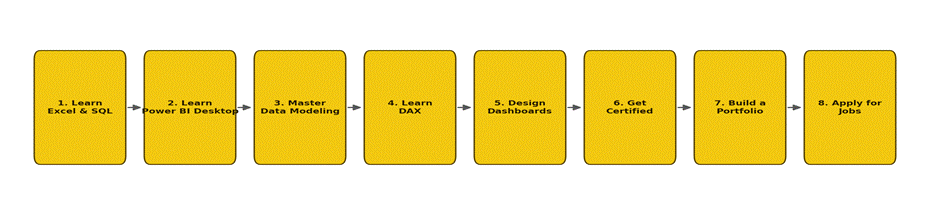
A simple 8-step roadmap to becoming a Power BI developer
- Learn Excel and basic SQL first. Power BI is much easier to pick up if you already understand rows, columns, filters and simple queries. You do not need to be an expert, just comfortable.
- Install Power BI Desktop and explore it. It is free. Import a small dataset (even a sample sales file) and just click around. Get comfortable with the layout before worrying about “doing it right.”
- Master data modeling. Learn how to connect tables using relationships and understand the star schema, which is the standard way to organize data in Power BI.
- Learn DAX. Start with simple measures like SUM and AVERAGE, then move to CALCULATE, which is the most important DAX function to understand well.
- Learn report design. Study why some dashboards are easy to read and others are confusing. Good spacing, clear titles and simple colors matter more than fancy visuals.
- Learn the Power BI Service. Practice publishing reports, setting up scheduled refresh, creating workspaces, and sharing dashboards with others.
- Get certified. A certification proves your skills to employers who don’t know you yet. More on this below.
- Build a portfolio and start applying. This is the step most beginners skip, and it is the one that actually gets you hired.
Best Power BI Certifications in 2026
Certifications are not required to get a job, but they help a lot when you have no work experience yet. They also give your learning some structure.
| Certification | Provider | Best For |
| PL-300: Power BI Data Analyst Associate | Microsoft | Beginners and career switchers — this is the main one to get |
| DP-600: Fabric Analytics Engineer Associate | Microsoft | Developers who also work with data pipelines and Microsoft Fabric |
| PL-900: Power Platform Fundamentals | Microsoft | Absolute beginners who want an easier first step |
You can find the official exam details and study guide for PL-300 on Microsoft’s certification page. It is the certification most job postings mention by name.
Tools and Technologies to Learn Alongside Power BI
Once you’re comfortable with the basics, these related tools will make you a stronger candidate:
- SQL Server or any relational database, since most business data lives there
- Excel, still used everywhere for quick data checks
- Microsoft Fabric, the newer platform many companies are moving to
- Git or a version control habit, useful once you work with .pbip project files
- Basic Python or R, only if you want to move into data science later — not required for most Power BI roles
How to Build a Power BI Portfolio (With Project Ideas)
This is the step that actually gets you hired. A certificate tells an employer you passed a test. A portfolio shows them you can do the job. Try building three to five of these:
- A sales dashboard using a public retail dataset
- An HR analytics dashboard showing attrition and headcount trends
- A finance dashboard tracking budget vs actual spend
- A dashboard built from a public dataset, such as government or health data
- A personal project, like tracking your own spending or fitness data
Publish each one to the Power BI Service, write two or three lines about the business problem it solves, and share the link on LinkedIn and GitHub. Employers care far more about seeing your thinking than seeing a perfect design.
Power BI Developer Salary in 2026
Salary depends heavily on location, company size and your experience level. These numbers are general estimates to give you a sense of scale, not exact figures — always check a live source like Glassdoor or Payscale for your specific city before negotiating.
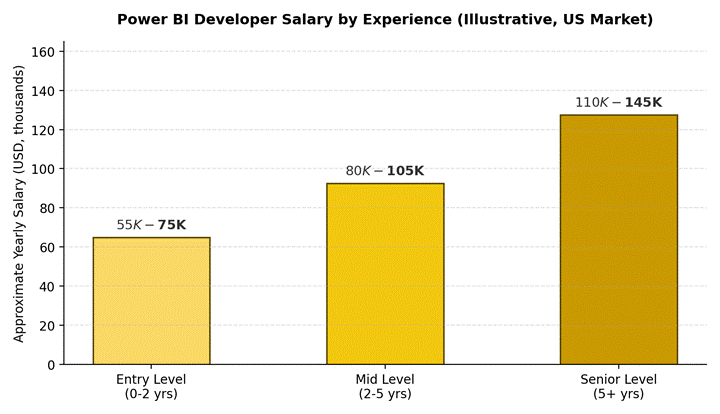
Illustrative Power BI developer salary ranges by experience level (US market)
| Experience Level | Approx. Salary (US, yearly) | Approx. Salary (India, yearly) |
| Entry Level (0–2 years) | $55,000 – $75,000 | ₹4 – ₹8 lakh |
| Mid Level (2–5 years) | $80,000 – $105,000 | ₹8 – ₹15 lakh |
| Senior Level (5+ years) | $110,000 – $145,000 | ₹15 – ₹30 lakh |
How to Get Your First Power BI Developer Job
- Tailor your resume to the exact job posting, using the same keywords they use
- Lead with your portfolio link, not just a list of tools you know
- Also apply for “Data Analyst” and “BI Analyst” roles — many use Power BI daily even if the title doesn’t say so
- Use LinkedIn actively; comment on posts from BI professionals and share your project dashboards
- Try freelance platforms for small paid projects to build real client experience
- Look for internships or contract roles as a way in, even if the pay is lower at first
Common Mistakes Beginners Make
- Watching tutorials for months without ever building an original project
- Learning DAX before understanding data modeling, which makes everything harder
- Making dashboards too colorful or crowded instead of clear and simple
- Skipping SQL because it feels less exciting than Power BI itself
- Waiting to “feel ready” before applying to jobs — most people never feel fully ready
Frequently Asked Questions
Do I need to know coding to become a Power BI developer?
Not really. You need to learn DAX, which is a formula language, not full programming. Basic SQL helps a lot too. Neither requires a coding background.
Is Power BI developer a good career in 2026?
Yes. Demand for data and reporting skills keeps growing, and Power BI remains one of the most used tools for this work, especially with Microsoft Fabric adoption increasing.
How long does it take to learn Power BI?
Most people can learn the basics in 6 to 8 weeks with consistent daily practice. Becoming genuinely job-ready, with a portfolio and solid DAX skills, usually takes 3 to 6 months.
Power BI Developer vs Data Analyst — what’s the difference?
A Data Analyst focuses more on finding insights in data. A Power BI Developer focuses more on building the reporting system itself — the data model, the DAX logic, and the dashboards. In many companies, especially smaller ones, the two roles overlap a lot.
Which certification should I get first?
PL-300, the Power BI Data Analyst Associate certification from Microsoft. It is the one most job postings mention directly.
Can I become a Power BI developer without a degree?
Yes. This field cares more about your skills and portfolio than your degree. Many working Power BI developers switched careers from completely different fields.
Final Thoughts
Becoming a Power BI developer in 2026 is a realistic goal, even if you are starting from zero. The path is clear: learn the fundamentals, build real projects, get certified, and put your work in front of people. It won’t happen overnight, but it also does not take years. Pick one step from the roadmap above and start today — that is the part most people never actually do.